The following are posts with the Asbestos tag:
22 January 2019
The HSE has lots of useful information available to those that have to work with or remove asbestos. These resources are freely available to download, or you can purchase hard copies if you prefer.
[Read on about Asbestos Essentials]
14 January 2019
Once again, contractors have ended up with a heavy fine after being prosecuted under the CAR12 (Asbestos) Regulations. In the court case two contractors were found guilty of not suitably managing the removal of some ceiling tiles at a school in Derby, they were fined over £100,000 plus ordered to pay a further £9,559 in costs. Asbestos is still being found in many of our refurbishment projects in...
[Read on about Asbestos Court Case Delivers Heavy Fine]
8 January 2019
3 October 2018
There is a new white paper available from Lucion Services written by Charles Pickles MSc, BSc, CPP (Asbestos). As we all know there is the 'duty to manage asbestos', this is the law. But how far have we come and, more importantly, how big is the current danger? Asbestos was used in construction as it was, before we knew any better, the new wonder material that allowed us to build fire-proofing in...
[Read on about Recommendation for Tighter Asbestos Controls]
9 August 2018
It has made the news recently that the Environmental Protection Agency (EPA) in United States of America are proposing a new framework to manage new uses for toxic chemicals in manufacturing. Whilst the EPA clarified it's position with a press release stating "the press reports on this issue are inaccurate. Without the proposed Significant New Use Rule (SNUR) EPA would not have a regulatory basis...
[Read on about Environmental Protection Agency and Asbestos in the USA]
18 June 2018
11 June 2018
At Ai Solutions we have spent many years in building our CDM knowledge-base and Asbestos knowledge-base. Originally they were only delivered as part of our CDM and Asbestos software packages. Many of you know that these packages are specifically aimed at those who need to comply with the CDM and Asbestos management regulations. However, the feedback we have received from customers is that they hav...
[Read on about Knowledge-base - A Useful Tool for Compliance]
23 April 2018
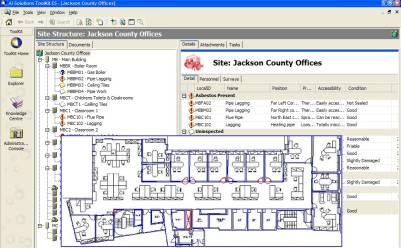
As many of our readers know we are software developers of health and safety products. One of our leading packages allows our customers to manage their Asbestos Compliance issues easily and simply. The Asbestos ToolKit CS software facilitates a completely audited system that provides you with peace of mind when managing your asbestos portfolio. When you have a large property base it can be difficu...
[Read on about Asbestos Compliance Made Easy]
26 November 2017
For those of you affected by asbestos there is help out there. You could even be entitled to financial support. Asbestos is one of the biggest workplace killers in the UK and causes more deaths a year than road traffic accidents. For many tradesmen, manual workers and engineers, asbestos exposure in the workplace will have been inevitable during the last sixty years due to its widespread use. Hav...
[Read on about Living in the Shadow of Asbestos]
8 November 2017
For most landlords and larger organisations trying to ensure you are complying with the law regarding Asbestos can be fraught with anxiety. Likewise, contractors carrying out work, particularly on older buildings, have to ensure the safety of those working on any constriction site. The Asbestos regulations, often referred to as the CAR12 regulations, are quite specific in the 'Duty to Manage'. Ho...
[Read on about Asbestos Safety Compliance]
11 October 2017
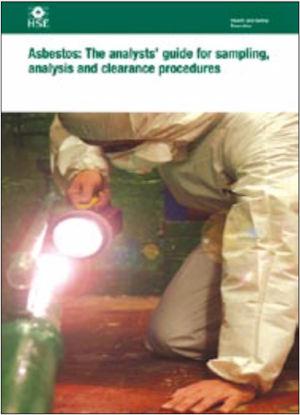
The HSE has produced another helpful guide, HSG248, which is an Analyst's Guide for sampling analysis and clearance procedures. We particularly liked the section on sampling and analysis of materials as it reminds us about the use of safe systems of work, after all, even though this is part of the analyst's day to day work we must remember that taking samples can also be hazardous! We also liked...
[Read on about HSG248 Analysts Guide]
27 September 2017
Ai Solutions will be running their free Application Development Forum (ADF) on Wednesday 8thNovember 2017 at our offices in Leighton Buzzard, 9:30-1pm. This is a very special event where we tell our customers about our future development plans. We have new products that are about to go 'live' and we want our customers to be the first to see them! This event is also an opportunity for our customer...
[Read on about FREE Application Development Forum - 8th November 2017]
21 September 2017
Ai Solutions held their ToolKit CS user workshop on Wednesday this week. These special events are aimed at providing our customer base with the opportunity to get the best out of their ToolKit CS systems. This type of face to face gathering allows our ToolKit CS users to find out what is new in the product and the attendees also 'had a go' on the system to try out the new features. Additionally we...
[Read on about September 2017 ToolKit CS User Workshop]
7 September 2017
An investigation has begun in a school in Wales where construction work was carried out. It is thought that some ceiling tiles were disturbed during some initial construction work. When new work was subsequently planned it was noted that some asbestos insulating ceiling tiles in the kitchen area of the school had already been disturbed. This lead to the employment of a licenced contractor, who co...
[Read on about Asbestos Found In Welsh School]
30 August 2017
We get a lot of queries from people and organisations about 'how' they should be managing their asbestos and what should they be doing to ensure that they are compliant with the CAR12 regulations. At Ai Solutions we pride ourselves in supporting our customers and we have produced the ToolKit CS Asbestos Compliance System to aid those who need help. In order to comply you need to make sure your bu...
[Read on about Compliance for Asbestos Management]
21 July 2017
Interesting article from the BBC in regard to asbestos in hospitals. It states that 94% of hospitals in London contain asbestos, what does this mean for the rest of the country? Doctor Peter Szlosarek, consultant oncologist at Barts Hospital, who is studying mesothelioma, has highlighted the following facts:- About 2,600 people die each year in the UK from the condition which affects the lungs...
[Read on about Hospital Asbestos 'a ticking time bomb']
20 July 2017
Close to home we have read that two schools in Shefford have been closed due to Asbestos contamination. Nearby demolition work has caused issues regarding the safety of the environment. There were unconfirmed risks concerning the safety of the site, this is due to the boiler room being partly demolished. Pupils were sent home as a safety measure. What it doesn't say is if a pre-demolition survey...
[Read on about Local Schools Closed Due to Asbestos]
30 June 2017
Calling all Surveyors! How long do you think it actually takes you to carry out your survey? This needs to also include creation of the Asbestos Survey Report, adding in any ACM details, photos, asbestos registers, MAS, RAS, PAS, etc.? Well could we estimate a minimum of at least 5-10 days? The time it takes to actually carry out the physical survey can pale into comparison when you have to then g...
[Read on about Asbestos Surveying Made Easy]
15 June 2017
Ai Solutions are pleased to announce that the long awaited, next Application Development Forum (ADF) is scheduled for Wednesday 8th November 2017at our offices in Leighton Buzzard, 9:30-1pm. This is a very special event where we tell our customers about our future development plans. We have new products that are about to go 'live' and we want our customers to be the first to see them! This event...
[Read on about FREE Application Development Forum - 8th November 2017]
15 June 2017
Once again Ai Solutions are offering a free workshop for our ToolKit CS customers and users on Wednesday 20th September 2017, 9:30-1pm at our offices in Leighton Buzzard. As usual this type of event is specifically designed to support and help our customers. We have always had excellent feedback from these types of event in the past and look forward to meeting our end users. For this workshop we w...
[Read on about FREE Customer Workshop - 20th September 2017]
1 June 2017
With the election looming, all the major parties have produced their manifestos. These manifestos all include health and safety, so what can we look forward to after the elections in regard to health, safety and employment? Labour Party Pledged to work with the Health and Safety Executive Committee to introduce mandatory workplace risk assessments for pregnant workers and review the suppor...
[Read on about Election 2017 - What Changes in Health and Safety?]
11 May 2017
The SHP has reported that 40 workers were put at risk by being exposed to Asbestos. A hearing was carried out at Canterbury Crown Court and a fine of £750,000 was ordered plus payment of costs totalling £14,874.68. "The company's failings in this case has put many workers at risk to the exposure of asbestos", commented HSE inspector Melvyn Stancliffe. "It was clear there was an endemic failure t...
[Read on about Reckless Asbestos Failure / CDM regulations fine]
13 April 2017
Asbestos can be found in any building built before the year 2000 (houses, factories, offices, schools, hospitals etc.) and causes around 5,000 deaths every year. Therefore if you are working on minor jobs your workers may well be in danger. It is called the silent killer for a reason. Hidden in dust and breathed in it can take many years for it to finally take its toll. The HSE has a lot of infor...
[Read on about Essential Advice for Working with Asbestos in Construction]
2 April 2017
If you are planning to undertake construction or if you are a landlord you need to be aware of the CAR12 regulations. You have specific duties that you must adhere to under the law. For those of you that are interested, one our partners is offering Asbestos training. If you would like more information about the courses on offer please contact Steve at DoctusTraining by emailing [email protected]...
[Read on about Asbestos Awareness / Training]
8 August 2016
Industry body, CL:AIRE (Contaminated Land: Applications in Real Environments) has recently published the JIWG (Joint Industry Working Group) guidance titledControl of Asbestos Regulations 2012: Interpretation for Managing and Working with Asbestos in Soil and Construction and Demolition (C&D) materials or CAR-SOIL™ for short. CAR-SOIL™ is described as "the authoritative document interpreting the...
[Read on about New Guidance on Working with Asbestos in Soil and C & D Materials]
26 January 2016
Despite many Asbestos Management campaigns by the HSE, and the high profile it has within the construction industry, we are still seeing some very high fines in regard to Asbestos. Whether it is refurbishment or demolition the client has a duty to manage. Where duty holders are falling fowl is in the production of up to date asbestos surveys so that construction can be carried out safely by contra...
[Read on about The Pitfalls of Asbestos]
5 May 2015
HSE have been running a campaign about asbestos safety - "BewareAsbestos" - argeted at tradespeople and have asked for your feedback. HSE would be grateful if you could spare no more than 15 minutes to complete a simple on-line survey. The survey is designed for any tradespeople who will have seen either the campaign leaflet or reference cards, whether by hard copy or digital copy e.g. online or...
[Read on about HSE "Beware Asbestos" Campaign]
19 March 2015
18 March 2015
The March 2015 edition of the Ai Solutions Newsletter is now available. CDM 2015 - The Countdown Has Begun... The CDM 2015 countdown has officially started here at Ai Solutions. There is a sense of excitement and a flurry of activity - all to get ourselves ready for the big change. Are you ready?... Asbestos ToolKit Lite To expand our portfolio of products for you to choose from we have introd...
[Read on about Newsletter - March 2015 - CDM 2015 Countdown, Asbestos ToolKit Lite]
30 December 2014
A recent online survey conducted by the construction workers union, UCATT, has shown that there are significant failings by employers to ensure that employees are not exposed to Asbestos. The survey of over 750 UCATT members showed that: 60% of respondents reported that by they may be exposed to asbestos due to the nature of their work. When exposed to asbestos, 63% believed it was a major hea...
[Read on about UCATT survey exposes Asbestos failings in industry]
19 November 2014
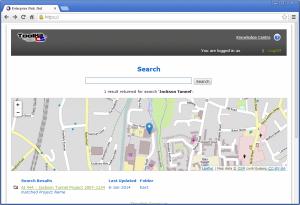
What is Geolocation (otherwise known as "Mapping")? It is the location of something using digital technology, usually on a map - like interface (Alex Fention, University of Salford). How can this technology help with my CDM and Asbestos Projects? it can help you and your team visualise sites, properties and structures it can map out your projects it can play a significant role in effective...
[Read on about Geolocation and Project Management - Q and A -ToolKit CS]
9 June 2014
A really interesting but emotive 30 minute documentary of the History of Asbestos. Worth a watch. It brings home how important it is to manage and handle asbestos properly.
[Read on about The History of Asbestos]
14 May 2014
12 February 2014
Joseph Gillian (an Asbestos Management Consultant) has started taking pictures of asbestos during recent surveys (in some schools). He plans to carry on taking even more interesting photos on his travels around the UK. These pictures will prove to be a great resource for many educators and interested parties alike. "There are no copyright issues, so feel free to use the pics as you see fit. It'd...
[Read on about Good Resource Alert!]
30 December 2013
In the news it has been revealed that almost half of schools in one particular northern city contain asbestos. Presumably the city council in question has an Asbestos Management Plan and easily accessible Asbestos Register in place and so was able to provide the details for this FOI request very easily. A little bit of background... Asbestos was used extensively in the UK in the 1950's until the...
[Read on about Schools and Asbestos - Unsure what to do next?]
28 November 2013
26 November 2013
15 November 2013
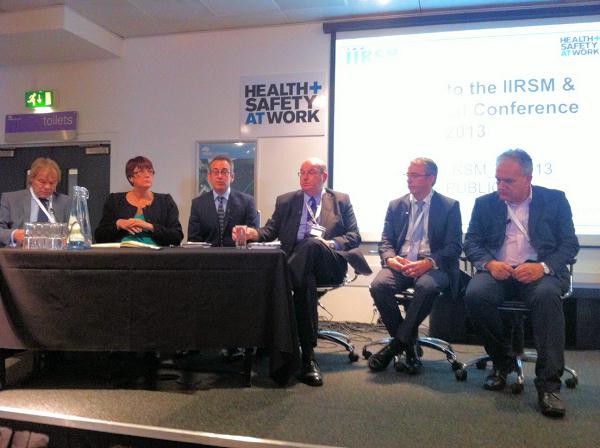
Having recently visited the IIRSM Conference in Birmingham we were very pleased with the conference as a whole but particularly interested in the update from Judith Hackitt, the Chair of the HSE. Judith stated that much about the implementation of the regulations is misrepresentation and as health and safety professionals we are all guilty of adding fuel to the flames. What the HSE does is good,...
[Read on about 2014: Change in Regulations, Behaviour, Culture]
31 October 2013
QUALSURV Environmental Solutions(QES) has recently gained Certificationof ISO/IEC 17025, enabling them to carry outair monitoring and 4 stage clearance. They have also recently moved into new premises enabling them to comfortably expand. Please click here to see the full [PDF] article
[Read on about QUALSURV - Latest News]
23 October 2013
Occupational Health and Safety is a recent development. Labour movements in the wake of the industrial revolution lead to workers being able to freely express their views and concerns about safe and healthy working practices. The first piece of legislation that created the first Health and Safety Inspectors (or then known as Factory Inspectors) was the Factories Act 1833. This initially focussed...
[Read on about Occupational Health and Safety - Past, Present and Future]
16 October 2013
Grant Prior reports on how aNorth East glass firm has been fined after potentially exposing nearly 200 workers and visitors to dangerous asbestos fibres at its Consett premises. They used a domestic vacuum cleaner to clean up the dust and debris and later used it in several parts of the building as they put up the sensors, spreading asbestos fibres around the premises. Click here to read full ar...
[Read on about Subbies use domestic vacuum to clean up asbestos]
17 September 2013
Professer Julian Peto (DSc FMedSci, London School of Hygiene and Tropical Medicine) recently submitted evidence to The Commons Select Committee - Education(25th March 2013)as part of the discussion regarding the mesothelioma risk (caused by asbestos) that still remains in many schools. The evidence is based on men and women (including some teachers) who have had some asbestos exposure. See Asbes...
[Read on about Asbestos In Schools]
9 September 2013
The Safety & Heath Practitioner (SHE) reports that a large hospital trust is being fined £350,000 over two Legionella incidents. One of the incidents led to a patient fatality from contracting Legionella's Disease. On 3 September 2013 Chelmsford Crown Court heard that a legionella investigation by the HSE found the Trust had failed to monitor the hot and cold water systems adequately or ensure ke...
[Read on about Hospital faces £350,000 fine over Legionella incidents]
26 June 2013
The BBC ran a story recently regarding asbestos in schools and how the evidence, provided by a special committee, showed that our Asbestos risk to children is 'greater over lifetime'. The committee stated that a five-year-old is five times more likely than an adult of 30 to develop mesothelioma, a type of cancer linked to asbestos, if they are exposed to it at the same time. This is because a chi...
[Read on about Asbestos Risk Greater For Children]
10 June 2013
A scientific advisory committee to the Government has concluded that children are more vulnerable to asbestos exposure than adults. The Committee on Carcinogenicity of Chemicals in Food, Consumer Products and the Environment (CoC) was asked for advice on the relative vulnerability of children to asbestos to inform discussions of the Department for Education's Asbestos in Schools Steering Group....
[Read on about Asbestos - Children at greater risk]
21 May 2013
17 May 2013
In the news recently, campaigners have expressed fears that thousands could miss out under a new compensation scheme for those with the asbestos-related cancer mesothelioma. Mesothelioma is a cancer of the lining of internal organs, notably the lungs, and almost always arises from exposure to asbestos. Asbestos has been used in the past within construction and is within many of our schools and ol...
[Read on about Government Mesothelioma Compensation Scheme]
22 April 2013
Asbestos is the UK's biggest workplace killer. The three main types of asbestos - blue, brown and white asbestos - can still be found in the workplace. There is no safe level of exposure and all types are dangerous. Around 4,000 people die each year from mesothelioma and asbestos related lung cancer - 11 people for every day of the year. This is greater than the number of road accident deaths. Bef...
[Read on about Asbestos Management Help]
26 March 2013
The HSE has published details of a recent case regarding asbestos. A number of workers and Royal Navy personnel were exposed to asbestos after pipes lined with the dangerous material were left on a roadside before being put in an open skip and transferred to a salvage yard, a court has heard. The pipes, lined with asbestos insulation, were removed from HMS Sultan naval training base in Gosport in...
[Read on about Firms fined for asbestos exposure risk at scrap yard and naval training base]
25 March 2013
The HSE has published a fact sheet on Mesothelioma Occupation Statistics. The fact sheet provides updated mesothelioma mortality statistics by last recorded occupation of the deceased within Great Britain from 2002-2010. Mesothelioma is directly linked to those works that were exposed to Asbestos fibres while at work and it remains one of the biggest killers. If you want to make sure your workers...
[Read on about Mesothelioma Occupation Statistics]
28 February 2013
The GMB union, who represent school support staff, welcomed the call for evidence by the House of Commons Education Select Committee on the issues around asbestos in Schools. Robin Nower, Director of Derisk UK - Asbestos Risk Management, discusses the issues surrounding the management of asbestos in schools in the UK. In this day and age and with the higher media profile of how bad asbestos can b...
[Read on about Asbestos in Schools - Manage the Risk]
13 February 2013
Apprentice tradespeople across Clydebank are set to benefit from a new e-learning package to help them better understand the risks from asbestos. Those who train apprentices are being offered the opportunity to find out how they can use the interactive resource at a free event at Clydebank College, Queens Quay Campus, Clydebank on Wednesday, 6 March, 1-4.30pm. The event has been organised by the...
[Read on about New Government Initiative in Clydesbank]
7 February 2013
The Health and Safety Executive (HSE) has prosecuted a Birmingham builder after he illegally removed and broke up asbestos panels from a home in Castle Bromwich. HSE inspectors visited a house on Rover Drive on 19 July 2012, following a call from a Solihull Council environmental health officer about possible unlicensed asbestos removal work. The subsequent HSE investigation found that, during wo...
[Read on about Builder fined for illegally removing asbestos]
1 February 2013
28 January 2013
For those among you who would like more information about managing the asbestos in your own building(s) the HSE has published a web site detailing 'how' you should do this. The web site is a step by step guide to all the duties regarding best management of asbestos www.hse.gov.uk/asbestos. Additionally Ai Solutions has help and guidance regarding Asbestos and the CAR12 regulations on our web site...
[Read on about Managing My Asbestos]
19 January 2013
The HSE has recently issued a press release regarding a hospital trust failing in their duties in regard to asbestos management. An investigation by the Health and Safety Executive (HSE) found that City Hospitals Sunderland NHS Foundation Trust had an asbestos survey that clearly showed there was asbestos in the door surrounds but, despite several site meetings between the Trust and the contracto...
[Read on about Hospital trust failed in their Asbestos Management duties]
17 January 2013
A Swansea engineering firm and building contractor have been fined for asbestos exposure. Workers were exposed to dangerous asbestos fibres following a catalogue of errors by an engineering company and a building firm during a demolition and refurbishment project in Swansea. The engineering firm had two asbestos management surveys for the site, which, although later deemed to be inadequate, ident...
[Read on about Swansea Firm Fined for Asbestos Exposure]
11 January 2013
The HSE are prosecuting a Swansea engineering firm and contractor after recent investigations revealed several breeches, one included the failure to appoint a competent CDM-C. It was also noted that during the demolition works an asbestos insulation board (AIB) covering a steel column was damaged, and a Wall Colmonoy employee was told to tape plastic bags around it. Work continued in the building...
[Read on about Swansea Contractor Orders Workers to Tie Plastic Bags Around Exposed Asbestos]
3 January 2013
Staffordshire County Council has been handed a court bill of £15,000 after admitting liability when dangerous asbestos fibres were released into the nursery of a primary school in Cheslyn Hay. Work was being carried out at the school when some board was misidentified and put into a skip. The contractor involved was also fined however they stated that 'only a small amount of fibres were released'....
[Read on about £15k Fine for Asbestos Fibres found in Nursery School]
4 December 2012
For those concerned about working on sites where there may be Asbestos; the HSE has provided excellent guidance to assist your decision making process regarding to non-licensed work; follow this link for further informationhse.gov.uk/pubns/guidance/a0.pdf. If you require further assistance regarding your Asbestos portfolio then please call Ai Solutions in the first instance on 01525 850080. We h...
[Read on about Asbestos: Guidance for Non-Licensed Work]
7 November 2012
Once again the HSE is fining an organisation in regard to illegal asbestos removal. A demolition firm has been prosecuted after exposing its own workers to dangerous asbestos fibres and illegally removing asbestos waste from a property in Gloucester. The firm undertook an asbestos survey before demolishing the building showing it contained a quantity of Asbestos Insulating Board. The company did...
[Read on about Illegal Asbestos Removal]
31 October 2012
It looks like the super-storm 'Sandy' that hit America recently has increased the threat of Asbestos exposure. Asbestos and Mesothelioma News stated that asbestos was used so liberally in the construction of America in the 20th century that an event such as 'Sandy' brings dangers in the debris. When it is encapsulated asbestos poses little danger. However, when disturbed and disrupted - which hap...
[Read on about Sandy Leaves Asbestos Danger In Its Wake]
22 September 2012
We are still seeing major issues around the management of asbestos. Recently Staffordshire County Council has had to admit liability when dangerous asbestos fibres were released in one of their schools. The result is a hefty fine after they admitted failing to ensure persons not in its employment were not exposed to risks. Unfortunately cases such as these are still fairly common and yet they can...
[Read on about Staffordshire School, Dangerous Asbestos Fibres]
10 September 2012
One of our readers has highlighted a very interesting story in the Irish Independent regarding am illegal dump of asbestos. With nobody obviously admitting responsibility it could cost the authorities more than 1.5million euros to clean up. For more on this story read State faces 1.5m asbestos dump bill
[Read on about Asbestos 'Dumped' in County Cork]
25 August 2012
Once again the HSE has come down hard on those not adhering to the Asbestos regulations. Two companies have been prosecuted after workers were exposed to potentially deadly asbestos fibres at a mill in Bolton. It is sad to hear that even with all the press and coverage situations like these are still occurring. For more on this story visit Firms prosecuted over asbestos danger at Bolton mill
[Read on about Asbestos Prosecutions in Bolton]
20 August 2012
An interesting story on the HSE web site; Two men colluded with each other to commit fraud by falsifying a record stating that a school in Abingdon had been properly cleaned of asbestos. So why would they do such a thing? Well apparently excuses like 'last day at the company' and 'it was a Sunday' came out at the inquest along with the temptation of finishing work early. A very unusual case, but...
[Read on about Asbestos - Fraudsters Collude To Trick Independent School]
6 August 2012
For those of you who would like to know more about Asbestos the World Health Organization has a lot of useful information about asbestos related diseases. At Ai Solutions we support the elimination of asbestos within construction. However we are a long way from achieving that due to the amount that has already been used. Asbestos based products are banned from new construction but refurbishment o...
[Read on about Elimination Of Asbestos-Related Diseases]
18 July 2012
A school in Dorset has recently been prosecuted by the Health and Safety Executive (HSE) for the unsafe removal of asbestos insulation boards which lead to several people being exposed to asbestos fibres. Sherborne School and Peter Eldridge, the director of a company responsible for the refurbishment project, have been fined after an investigation found they had failed to identify and prevent the...
[Read on about Safety failings led to asbestos exposure at Dorset school]
12 July 2012
The video linked to this article has been removed from YouTube and is no longer available. Christopher Morgan was diagnosed in November 2008 with mesothelioma - an incurable cancer caused by exposure to asbestos. He was working as a pipe fitter when he came into contact with the deadly fibres, and here he and his partner Jean tell their stories. Christopher died in March 2010. Watch his story...
[Read on about Asbestos Mesothelioma - Christopher Morgan's Story]
19 June 2012
The Swindon Advertiser reports that British Rail has paid £60,000 in compensation to the family of a former Swindon railway worker who died from asbestos related cancer. The victim Philip Smith, worked for British Rail for 26 years at its Swindon works and for much of that period was continuously exposed to asbestos. He died in November 2010. Recently the same newspaper ran a special report into...
[Read on about £60k Payout to Family of Asbestos Victim]
9 June 2012
The National Asbestos Helpline (NAH), which represents the victims and their families of asbestos-related disease, is adding its support to the growing number of global organisations calling for a total ban on the use of the material. The NAH, which represents the victims and their families of asbestos-related disease, is adding its support to the growing number of global organisations calling fo...
[Read on about Ban Asbestos Globally]
25 May 2012
East Riding of Yorkshire Council and Sheffield City Council, who are part of the Yorbuild framework have picked 55 consultants from more than 1,000 who applied for a place on the YORconsult framework. East Riding are customers of Ai Solutions and are long term users of our asbestos management software. Steve Taylor (East Riding of Yorkshire Council) is one of Ai Solutions' Excellent Practitioners...
[Read on about YORconsult Framework]
22 May 2012
The Construction Index report that compliance with the new Asbestos Regulations (CAR 2012) is not going to be high. Like its predecessor, the new regulations apply to work involving removal, repair or disturbance of asbestos, and has implications for anyone involved in the maintenance or repair of buildings. Failure to comply with the regulations constitutes a criminal offence under the Health an...
[Read on about Asbestos Regulations - Lack of Awareness?]
21 May 2012
Around one in five workers over 55 regularly works from home, according to a TUC analysis of official figures published on Friday to mark National Work From Home Day, organised byWork Wise UK. The TUC analysis shows that the number of home workers has grown steadily during the past decade. For some time now technology has improved to the point that working from home is like 'working in the offic...
[Read on about TUC - Older 'Home' Workers]
17 May 2012
Our Australian counterparts are showing us Brits how it should be done in regard to Asbestos. They have set up an informative and emotive new online resource - the Australian Asbestos Network. Launched in March 2012 and funded by the National Health and Medical Research Council, the Murdoch-led initiative features medical information, information about asbestos in homes and the environment, as we...
[Read on about Website Educates Asbestos Risks Past & Present]
17 May 2012
There's an interesting article in Industry Today about an "asbestos timeline". Silverdell PLC have published an historic timeline on the subject of asbestos, in a visual and easily shareable format. They have adapted the timeline and accompanying article to reflect the recent supreme court landmark ruling and the changes to the CAR 2012 regulations. For more on this article view Asbestos Uses and...
[Read on about Asbestos Timeline - Updated to include (CAR) 2012]
17 May 2012
The Bournemouth Echo reports that a local builder has been fined after carrying out demolition work on a house. He negated the requirement to carry out an asbestos survey before commencing work. Self-employed Stuart Pearson was prosecuted by the Health and Safety Executive (HSE) for not having a pre-demolition survey to check all asbestos had been removed from the building. This type of work is v...
[Read on about Verwood Builder Fined - Asbestos Risk]
16 May 2012
BBC news reports that Asbestos waste, that was excavated during an operation to recover the body of a horse which had fallen into the shaft near Redruth in February, is going to be removed. Residents were very concerned about the hazard to their health but the Environment Agency said it was a "relatively small amount" which would be removed, although no date was given. For more on this story vis...
[Read on about Asbestos Waste 'will be removed' Environment Agency Pledges]
11 May 2012
Barratt, the UK's largest homebuilder, saw its best spring selling season in five years as government moves to boost the market helped to raise prices and sales.Aided by government schemes that have helped to raise the prices of new houses, homebuilders have seen their sales rise. This is good news then within the industry? At the moment we are glad to hear this with the current financial climate...
[Read on about Boost In Sales Versus Changes In Legislation]
10 May 2012
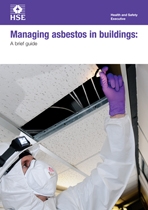
INDG223 has now been published. This is a revised leaflet for the Control of Asbestos Regulations 2012. It combines two leaflets:A short guide to managing asbestos in premises and Manage buildings? You must manage asbestos. The leaflet is for people who own, manage or have responsibilities for buildings, which may contain asbestos. This includes all non-domestic buildings, whatever the type of bu...
[Read on about New HSE Publication: Managing asbestos in buildings]
3 May 2012
Many of our readers will know that we advocate the management of Asbestos and that we believe it is a 'top-down' approach. A recent court case judgment may have far reaching ramifications for UK companies and their subsidiaries. The court has ruled in favor of an asbestos sufferer who sought damages from a "parent company". The case will mean that more liability will be placed on parent companies...
[Read on about Historic Asbestos Case]
3 May 2012
Here is a warning to those who dump their asbestos waste illegally. The Safety & Health practitioner reported that the owner of a small roofing firm has been electronically tagged after admitting to fly-tipping asbestos on a road in Kent. For more on this story see Roofer given curfew order for illegally dumping asbestos.
[Read on about Roofer is Tagged for Illegal Dumping of Asbestos]
2 May 2012
Many of our readers know that we advocate sharing of information and collaboration of work, so it is good to see more collaboration going on. The Circle Housing Group is aiming to hand the removal of asbestos to three specialists. Circle own more than 63,000 homes and is running a tender for their asbestos removal programme. If you are interested visit their website www.circle.org.uk. Asbestos i...
[Read on about £30m Asbestos Removal Collaboration]
25 April 2012
Sufferers of asbestos-related cancer will initially be exempt from government changes to "no-win, no-fee" rules, a justice minister has said. Peers and campaigners say mesothelioma victims should be exempt because the illness's severity is indisputable. Jonathan Djanogly said there would first be a review of the changes, which will see successful claimants pay part of their damages to their solic...
[Read on about Asbestos Exemption]
2 April 2012
Our partner Callsafe Services have just published the list of changes in their latest Construction Health and Safety News. On 6 April 2012 the new regulations(CAR12) come into force. These regulations revoke the 2006 regulations, and the 2007, 2008 (2 off) and 2009 amendment regulations. The changes are as follows: Regulation 2 includes new definitions of "asbestos cement", "asbestos coatin...
[Read on about What has changed in the Control of Asbestos Regulations 2012?]
30 March 2012
The Control of Asbestos Regulations 2012 will come into force on 6 April 2012, updating previous asbestos regulations to take account of the European Commission's view that the UK had not fully implemented the EU Directive on exposure to asbestos (Directive 2009/148/EC). In practice, the changes are fairly limited and mean that some types of non-licensed work with asbestos now have additional req...
[Read on about New Asbestos Regulations Come into Force]
6 March 2012
29 February 2012
10 February 2012
The IBTimes reports that a Tube worker stated 'asbestos is all over the place on London Underground'. I am sure that many of us travel via the tube on a regular basis and this news may well not be a surprise for a few of us. The age of the underground is such that it would have been common place to use asbestos during the building of services. For their part TfL has said that there are strict con...
[Read on about Underground: Deadly Asbestos 'all over the place']
4 February 2012
Huntingdonshire District Council's Environmental and Community Health team will be targeting businesses across Huntingdonshire; their planned Asbestos Inspections are being done to ensure that businesses are not exposing employees to potentially harmful asbestos fibres, and are complying with their duty to manage any asbestos present in their premises. Will this mean other Local Authorities will...
[Read on about Asbestos Inspections Planned: Huntingdonshire]
3 February 2012
Some of you may have read in the Telegraph and other news sources, that a report published by the All-Party Parliamentary Group on Occupational Safety and Health, looked into official figures showing more than 75% of state schools are exposing children, teachers and other staff to the carcinogenic material. It comes after more than 140 teachers died from the rare asbestos-related cancer mesotheli...
[Read on about School Asbestos 'National Scandal']
12 January 2012
Wales Online reported recently on a story that has shocked a lot of people. The HSE were called anonymously to investigate a Welsh factory that makes knitwear for the Royal Family. The contractor, Paul Hart who is a specialist in the safe removal of asbestos, was called in to decontaminate the factory. He found "clumps and clumps" of the material - which can cause lung cancer and other serious he...
[Read on about Large & Costly Asbestos Decontamination]
20 December 2011
On the HSE web site we found an interesting document which outlines their plan of work from 2011 through 2012. In particular we noted their target sectors include:- Asbestos Small Sites/Projects Refurbishment Major clients/projects We think that covers most of our readers! it will be interesting to see how they will achive this. If you are interested in reading more about the HSE's plan...
[Read on about HSE: Plan of Work 2012]
15 December 2011
At a meeting in early December it was announced that the HSE has been given government clearance to recommence the Health and Safety Executive's award-winning 'Hidden Killer' asbestos campaign which was put on hold due to a freeze on government-funded campaigns. This is good news for 2012; we believe this particular campaign was excellent, warning construction workers, particularly those involved...
[Read on about HSE Updates: Asbestos]
28 November 2011
Some sad news we read recently about regarding the dumping of asbestos in the streets where pedestrians, children etc require access. We have to question if we are seeing this as a consequence of 'cuts backs' and if we will be seeing more of it in the future? It is not a situation we want to see becoming commonplace in our streets so what can we do about it? We have only one recourse - report the...
[Read on about Dumped Asbestos]
28 September 2011
Once again the Health and Safety Executive (HSE) are making an example of those who put members of the public and their staff at risk during construction works. Marks and Spencer, the well-known retailers, has been found guilty and fined £1m as recent construction works put people at risk of asbestos exposure during a facelift at its Reading store. They were also ordered to pay £600,000 costs on...
[Read on about Major Retailer: Asbestos Fine]
28 May 2011
The Safety and Health Practitioner has reported that the Government's chief scientific advisor has reaffirmed the status of chrysotile (white) asbestos as a Class 1 carcinogenic substance, and has concluded that there is no valid reason to demote it to a less-serious category. Last year, Sir John Beddington, head of the Government Office for Science, was approached to consider whether any evidenc...
[Read on about White Asbestos: Definitely Top-Level Carcinogen]
27 May 2011
It would seem that things may be taken more seriously for asbestos victims. We read in the Law Society Gazette that lawyers acting for people suffering from asbestos-related diseases have renewed their appeal for a fund of last resort' when insurance details cannot be found. The scheme would work as a safety net for victims of disease - mainly incurred through their work decades ago - when victim...
[Read on about Last Resort Fund for Asbestos Victims]
21 February 2011
The TUC February newsletter reports that the government has been told that the UK version of a European Union-wide law on asbestos safety is illegally lax and must be amended. The UK legislation currently focuses on the measurement of exposure to asbestos and not enough on the how the material will be affected by the work itself, while the directive deals with both exposure and the material. TUC...
[Read on about UK Asbestos Law not up to EU Standard]
18 February 2011
A UK demolition firm has been fined over Asbestos say the Demolition News. The Yorkshire-based firm was the principal contractor on a demolition project and they were fined for failing to manage and monitor asbestos removal work at a site in Nottinghamshire. A number of buildings on the site contained notifiable asbestos, the removal of which should be declared to the Health and Safety Executive (...
[Read on about UK Firm Fined Over Asbestos]
29 November 2010
97 Indian citizens poisoned by asbestos have finally secured compensation for injuries sustained at the hands of a British company - Turner & Newall Ltd (T&N). For more than 60 years T&N operated asbestos factories in India. The company processed asbestos and sold a range of asbestos products. According to campaigners, conditions were appalling and employees were routinely exposed to massive level...
[Read on about Asbestos Victims Finally Get Compensation]
9 October 2009
It is sad to see that demolition of buildings without proper controls to manage asbestos is still happening. The HSE has recently taken two companies to court after an unlicensed contractor was appointed to remove 3,000 sqm of asbestos insulating board from a warehouse. A&T Roofing had been awarded the contract for the work in November 2005 by Noble Gift Packaging Ltd. Enfield-based contractor A&...
[Read on about Asbestos Fines]
7 November 2007
3 July 2007
10 January 2004
I thought that you would like to know that HSC have agreed that we should proceed with the revision of the CDM and CHSW regs. The ambitious aim is to publish a consultative document next Spring. As far as possible I want to move forward by consensus, involving as many interested parties as possible. The high level objectives for the revision, agreed with CONIAC and endorsed by HSC, are to impro...
[Read on about Managing Asbestos in Premises]
1 December 2003
We are continuing to support HSE, by publicising their Asbestos Awareness Campaign. This is part of our remit to improve health & safety in the construction industry with audited management information systems. The article "The Duty to Manage Asbestos", written by the HSE, contains much advice and guidance for everyone involved in the subject. A key issue is that many buildings managers are both...
[Read on about Asbestos Awareness Campaign]
29 September 2003
A recent report in the Yorkshire Post makes some shocking revelations about people who have contracted mesothelioma. The Yorkshire Post report pulls together information from the HSE and the Trades Union Congress and claims 'to come just months after a Yorkshire Post investigation revealed fears over a new wave of victims, people who have had no direct or obvious contact with asbestos, but have st...
[Read on about Yorkshire Post Report on Asbestos Victims]
10 September 2003
Control of Asbestos at Work Regulation 4 Duty to Manage Asbestos The HSE is seeking the views of duty holders on progress of the new duty as part of HSE's one-year review of the operation of the new duty to manage asbestos in non-domestic premises. As you may be aware the Government gave a commitment during the House of Lords debate in December 2002 to review the new duty by the end of this y...
[Read on about HSE Questionnaire]
1 August 2003
We are introducing a new series of free briefings & demonstrations about asbestos management and our software solution ToolKit CS™ Asbestos. Taking place at Leighton Buzzard, we have some dates available during the next 6 weeks and details are available on our web site or from us direct if you prefer to call us. This is an opportunity to get to know us, our solutions and benefits to evaluate how...
[Read on about Briefings and Product Demonstrations]
10 July 2003
The main group of workers that need protection from asbestos whilst performing their duties are maintenance and installation engineers. The new Regulation 4, the Duty to Manage, in the Control of Asbestos at Work Regulations 2002 will require that this group of workers will have access to all the information concerning asbestos within the premises they are working on. And that applies to all build...
[Read on about Asbestos Alert for Maintenance Workers]
10 June 2003
Time is running out for the non-domestic property owners with new duties under the Control of Asbestos at Work Regulations 2002. With deaths exceeding 5000 per year in the UK from asbestos related diseases, the UK government have acted to protect the most at risk; maintenance workers and anyone who has the potential to disturb asbestos unknowingly. The HSE have tried to ensure that all people res...
[Read on about When Access To Instant Information Could Save Lives]
1 February 2003
We will shortly be announcing the agenda for our first joint seminar with Heald Solicitors in Milton Keynes to be held on 6th March 2003. The agenda will be of interest to anyone concerned with both the legal aspects of the new asbestos management regulations and how they need to be managed. Heald Solicitors have an established construction based team well aware of the new legal requirements;...
[Read on about Asbestos Law Unmasked]
31 October 2002
New legislation was signed on the 24 October 2002 by the Minister of Work to create an explicit duty to manage asbestos in premises. Implementation of this duty will make a major contribution to protecting people at work in the building - including maintenance workers - as well as members of the public potentially at risk. Under the new legislation, employers, for the first time, will have a spec...
[Read on about Asbestos Awareness - Introducing the Legislation]
10 October 2002
Ai Solutions Ltd have just launched their new asbestos management software called Asbestos ToolKit CS™. They will be demonstrating the new product at the SHE exhibition together with their updated market leading CDM software. The new asbestos legislation requires that if you own, occupy, manage or have responsibilities for premises which may contain asbestos, you will either have: A legal du...
[Read on about SHE Editorial: New Regs - New Software]
2 October 2002
Following an enquiry by a RICS member who stated that 'the RICS' had advised them not to proceed with the management of asbestos in their practice because they could not be insured through the RICS, we asked the RICS for their comment. This is their reply; Contrary to what you may have been led to believe we see the Control of Asbestos at Work Regulations as a potential market opportunity for m...
[Read on about Asbestos Awareness Campaign - Question To RICS]
1 October 2002
"A Comprehensive Guide to Managing Asbestos in Premises" lists the following 10 Key Facts; If you don't manage asbestos in your premises, you could be putting your employees and other peoples health at risk. Exposure to asbestos occurs when you or others disturb it, releasing fibres into the air we breathe. Asbestos in good condition should be left in place and managed. Most work on asbestos...
[Read on about Asbestos Awareness Campaign - Ten Key Facts]
10 July 2002
10 May 2002
10 April 2002
10 February 2002
11 August 2001
10 August 2001
The Health and Safety Executive (HSE) has published guidance on how to survey workplace premises for asbestos [containing materials] and how to record the results. "Surveying, sampling and Assessment of Asbestos Containing Materials" has been produced as a standard for people carrying out - or commissioning - asbestos surveys in buildings. The guidance (known as MDHS 100) will form an important el...
[Read on about Guidance on How To Survey Buildings for Asbestos]
10 March 2001
THE DUTY TO MANAGE ASBESTOSAN AWARENESS CAMPAIGN Setting the Scene Asbestos is the biggest occupational health problem ever encountered in the UK, and it is a problem that is set to get worse over the coming twenty or so years. The fifteen year plus latency period of asbestos means that positive efforts made now to reduce the effect of this killer disease will not be realised for some time. Ho...
[Read on about Asbestos Awareness Campaign]
10 April 1999
Guidance for employees on wearing respiratory protective equipment for work with asbestos Why is asbestos dangerous? Breathing in asbestos fibres can lead to asbestos-related diseases. These are mainly cancers of the chest and lungs and they kill more people than any other single work-related cause. There is a long delay between first exposure to asbestos and the start of disease. This ca...
[Read on about Asbestos Dust Kills]
10 April 1999
Essential advice for workers carrying out: Building maintenance Building repair Building refurbishment Building services Asbestos: The hidden killer! Are you at risk? What does this leaflet tell you and who is it for? This leaflet tells you where you are most likely to find asbestos and how to protect yourself when working with it. It will be particularly useful for anyone involved...
[Read on about Working with Asbestos in Buildings]
1 August 1996
Managing asbestos in workplace buildings : the hidden killer! Are you putting others at risk? Managing asbestos materials in workplace buildings If you own, manage or have responsibilities for a workplace building which may contain asbestos, you need to think about the risk of exposure to workers and others who may use the building. It is your job to manage that risk. A sound management strate...
[Read on about Managing Asbestos in Workplace Building]